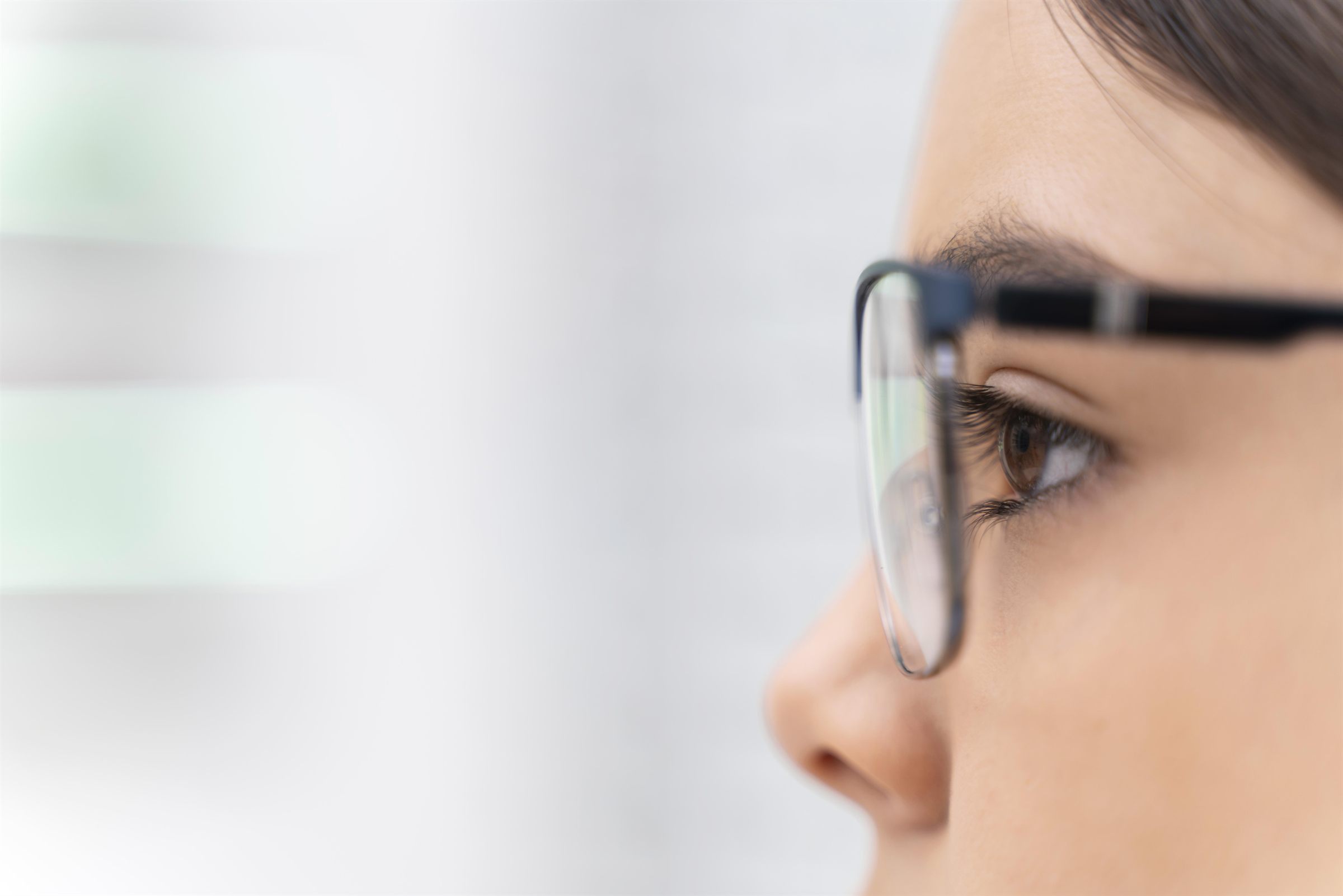
Myopia Management
Are distant visuals appearing hazy? Our focused approach to short-sightedness refines your sight and decelerates its progression, reducing the need for stronger lenses over the years and protecting your long-term eye health.
Short-sightedness is manageable, and we'll show you how
Myopia is a widespread visual discrepancy: distant objects blur while close-up ones stay sharp. It arises when the eyeball grows longer than it should, or the cornea curves too steeply, focusing light just in front of the retina rather than upon it. Onset is typically in childhood, and it can worsen steadily until the early twenties.
Glasses and contact lenses correct the blur, but they do nothing to slow the underlying growth. Myopia management is different: a deliberate plan to decelerate that progression, so the prescription your child ends up with as an adult is a weaker one.
It's about far more than a stronger prescription
Every additional dioptre of myopia carries a measurable, lifelong increase in the risk of serious eye disease. A longer eyeball means a stretched, thinner retina, and that is what makes high myopia a genuine health matter rather than a cosmetic one.
Slowing progression during the childhood years, when the eye is growing fastest, is the single most valuable intervention available. It is also a window that closes.
Retinal Protection
A lower lifetime risk of retinal detachment and myopic damage to the retina.
Later-Life Risk
Reduced likelihood of developing early cataracts and glaucoma with age.
Thinner Lenses
Lighter, better-looking lenses, and far better unaided vision day to day.
Fewer Changes
Fewer prescription updates, with less disruption to school, sport and play.
Signs you or your child might be myopic
The most conspicuous symptom is blurred sight at a distance, but children rarely report it, because they have no idea the world is meant to look sharper.
Persistent Squinting
Narrowing the eyes to bring distant objects into focus, often unconsciously, and most noticeably when reading a board or a road sign.
Eye Strain & Fatigue
Tired, aching eyes after school, screen time or driving, sometimes with a need to rub the eyes frequently.
Recurrent Headaches
Dull, end-of-day headaches across the brow and temples, caused by the constant effort of straining to focus.
Sitting Closer
Moving nearer to the television, holding a device close, or asking to sit at the front of the classroom.
Trouble at Distance
Difficulty seeing clearly while driving, particularly at night, or losing track of the ball during sport.
A Dip at School
Falling concentration or slipping marks with no obvious cause. Undetected myopia is frequently mistaken for inattention.
How we confirm and measure myopia
Precise causes remain uncertain, but genetics, prolonged close-up work and limited time outdoors all raise susceptibility. Our assessment establishes whether myopia is present, how strong it is, and, critically, how fast it is changing.
-
01
Full Eye Health Review
An all-encompassing examination of the health of the eye, inside and out, to rule out any other cause of the blur.
-
02
Distance & Clarity Testing
A diverse distance evaluation across various ranges, plus an optical clarity test to determine the intensity of the nearsightedness.
-
03
Corneal Curvature Analysis
Measuring the curvature of the cornea, closely linked to myopia, which also determines suitability for overnight lenses.
-
04
Tracking Over Time
We record the numbers at every visit, so progression is measured rather than guessed at. Rate of change is what shapes the plan.
How we slow myopia down
Solutions differ from person to person. Standard glasses and contacts correct vision but don't change its course. These approaches are chosen to do both.
Orthokeratology (Ortho-K)
Bespoke rigid lenses worn overnight that gently reshape the cornea while your child sleeps. They're removed in the morning, leaving clear unaided vision through the day, no glasses, no daytime lenses, while slowing progression. Well suited to active children and sportspeople.
Atropine Eye Drops
A low-dose drop instilled at bedtime. It eases the focusing strain inside the eye and has a well-documented effect on slowing axial growth. Simple, comfortable, and easily combined with ordinary glasses.
Myopia-Control Lenses
Spectacle and soft contact lenses engineered specifically for control. They correct distance vision through the centre while directing peripheral light in a way that signals the eye to slow its growth, worn exactly like normal lenses.
Lifestyle & Habits
Around two hours of daylight outdoors each day is genuinely protective, as is regular breaks from close work. We'll build these into the plan, because the everyday routine does real work alongside any lens or drop.
Myopia questions we're asked most
Straight answers for parents weighing up whether to act now or wait.
Procrastinating on nearsighted complications isn't advisable. Our optometrists are here to craft a plan aligned with your distinct needs and daily habits.
Contact UsNo. Myopia does not reverse on its own. It typically worsens through the school years and only settles in the early twenties. What can change is how far it progresses in the meantime, and that is precisely what management addresses.
As soon as myopia is detected. The eye grows fastest in the younger school years, so the earlier a plan begins, the more progression there is left to prevent. Children who become myopic before the age of ten benefit most.
Yes, when properly fitted and cared for. Ortho-K is well established internationally for children. We fit the lenses precisely, teach handling and hygiene thoroughly, and review your child regularly to confirm the cornea stays healthy.
They don't make it worse, but nor do they slow it down. An ordinary prescription corrects the blur and leaves the underlying growth of the eye untouched, which is the distinction between correcting myopia and managing it.
Adult myopia is usually stable, so the emphasis shifts to the sharpest, most comfortable correction and to monitoring the health of a longer eye. If your prescription is still climbing in adulthood, come and see us. That warrants a closer look.
Consultations are charged at medical aid rates and most major schemes are accepted. Cover for speciality lenses and drops varies by plan. We'll walk you through the costs before anything is agreed.
Take control of short-sightedness
Modern myopia management can slow progression and protect long-term eye health, for children and adults alike.